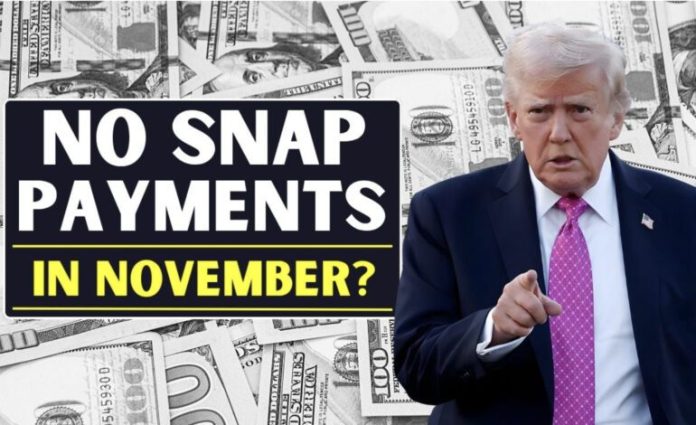
The United States military is quietly ramping up preparations to intervene in what officials fear could be widespread civil unrest on November 1, when 42 million SNAP recipients will wake up to empty EBT cards due to the government shutdown.
As reported previously, ICE and the FBI last week alerted the administration to on-the-streets chatter and signals intelligence data suggesting that residents in low-income neighborhoods in Chicago, New York City, and Atlanta would massively riot, loot, and pillage if the government suspends SNAP. After we published that report, US intelligence assets increased surveillance and, a War Department source told RRN, learned that social media, especially BlueSky, had become a breeding ground for peeved slackers preaching violent rhetoric.
The FBI, DHS, and the Secret Service, our source added, have been diligently monitoring more than 2,500 social media accounts, many of them bot-driven, encouraging adherents to riot in the streets, ransack grocery stores, and firebomb government institutions in protest of the government shutdown. The information, our source said, was shared with President Trump, Pete Hegseth, Kristi Noem, and Tulsi Gabbard, all of whom agreed that a strong military presence might be needed to vanquish a potential insurrection.
A War Department memo reviewed by RRN proposes a multi-phased response: soldiers from the 82nd and 101st Airborne Divisions would reinforce DHS and ICE agents in besieged communities; Marines from Camp Lejune, 29 Palms, and Camp Pendleton would bolster defenses; and the Air Force would perform aerial reconnaissance with UAVS. Active-duty troops at Fort Bragg and Joint Base Lewis-McChord are also undergoing rapid deployment drills. These exercises simulate urban warfare scenarios, including crowd control in riot-prone areas like food distribution centers and supermarkets.
Phase One, if it happens, involves prepositioning non-lethal equipment: rubber bullets, tear gas canisters, water cannons, and acoustic dispersal devices capable of emitting ear-piercing sounds to scatter crowds. Phase Two is lock-and-load, to be implemented if federal forces face intense pushback. Phase Three, a dire scenario, is Martial Law—mandatory curfews and roving patrols in cities rife with looting. Our source said, however, that the above is the worst-case contingency plan—dubbed “Guardian Shield,” an until now classified protocol on handling domestic insurgencies.
“We’re not looking for confrontation,” our source said. “But if protests turn violent—looting stores, blocking highways—we have to restore order swiftly to prevent escalation. We could be looking at George Floyd and Rodney King-type riots. Imagine lines at food banks turning into flash mobs, then into full-scale riots. The military’s role would be to quarantine affected zones, using drones for surveillance and armored vehicles to secure perimeters.”
Public reaction to the suspension of SNAP has been a mix of outrage and resignation. Social media is ablaze with hashtags like #SNAPShutdown and #HungerRiots.
As November 1 approaches, the nation holds its breath. Will Congress blink and restore funding, or will the streets erupt?